
TMJ Surgery
TMJ Surgery
Advanced surgical management of selected temporomandibular joint conditions.
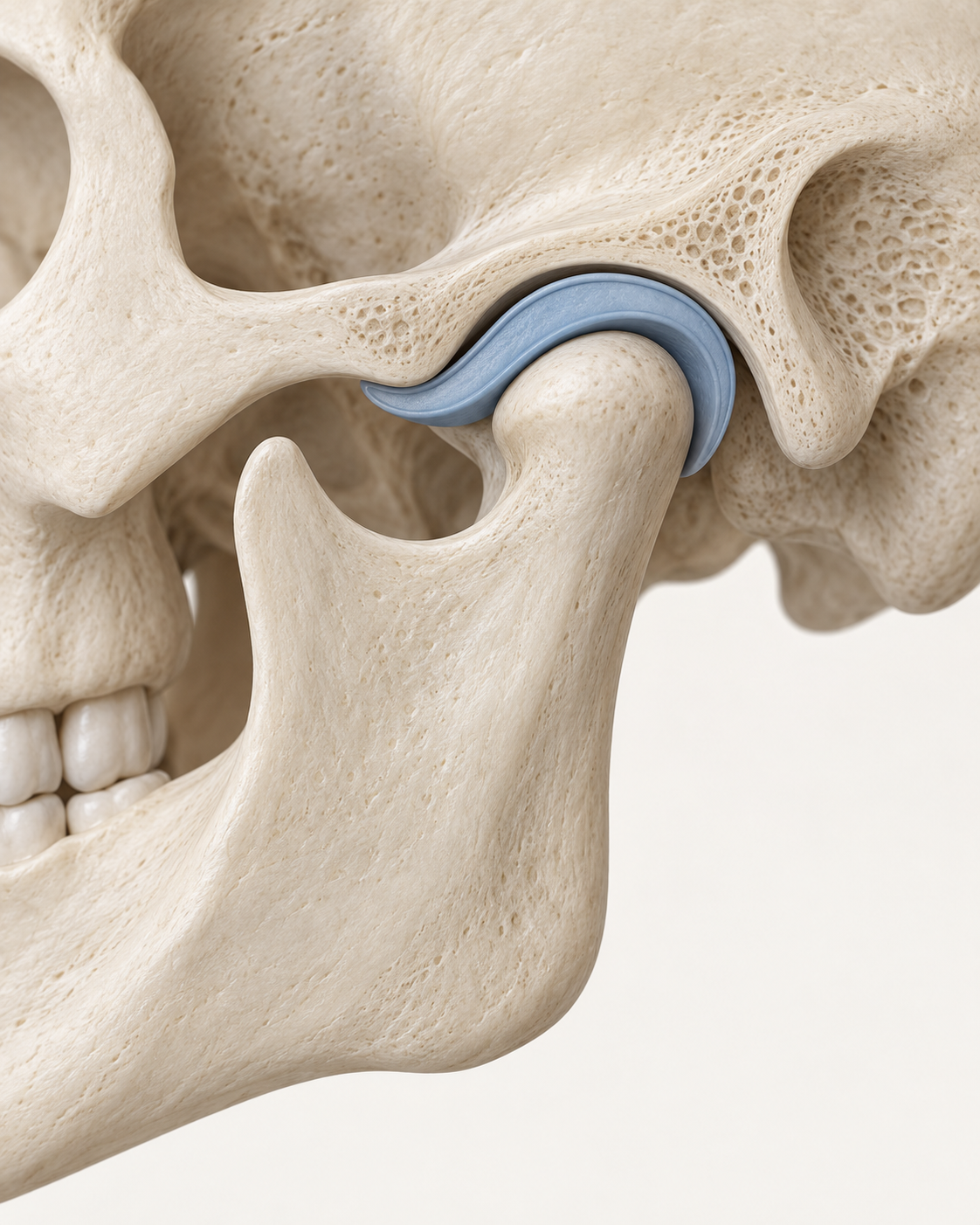
Procedures in TMJ Surgery
- TMJ ArthroscopyMinimally invasive examination and treatment of the jaw joint using a small camera.
- Open TMJ SurgeryDirect surgical access to the jaw joint for conditions not suitable for minimally invasive treatment.
- Disc ProceduresSurgical management of a displaced or damaged articular disc.
- Condylar SurgerySurgery addressing abnormal growth, shape or disease of the mandibular condyle.
- TMJ ReconstructionReconstruction of the jaw joint when it has been lost or severely damaged.
- Total Joint ReplacementReplacement of both the condyle and the fossa with a prosthetic jaw joint.
Overview
Advanced surgical management of selected temporomandibular joint conditions.
Every recommendation follows an individual assessment of your concerns, anatomy and goals. The sections below explain how this treatment is typically diagnosed, planned and carried out.
Who May Benefit
- Patients with jaw joint conditions that have not responded adequately to non-surgical care
- Patients with mechanical joint problems such as locking or restricted opening
- Patients with structural joint disease identified on imaging
- Selected patients with joint conditions affecting facial growth or symmetry
Conditions Treated
- TMJ disorders
- Disc disorders
- Degenerative joint disease
- Ankylosis
- Condylar conditions
Diagnosis
Most jaw joint symptoms are managed without surgery. Assessment includes a detailed history, examination of jaw movement, muscles and bite, and imaging such as MRI or CBCT where indicated. Surgery is considered for selected patients once the diagnosis is clear.
Treatment Planning
Treatment usually follows a stepwise approach, starting with conservative measures such as physiotherapy, splints or medication, and progressing to minimally invasive or open procedures only when indicated. Collaboration with other specialists may be part of the plan.
Virtual Planning
3D Planning
For reconstructive joint procedures, 3D imaging can be used to design patient-specific joint prostheses and cutting guides, and to plan combined joint and jaw surgery when needed.
Surgical Overview
TMJ surgery ranges from minimally invasive arthrocentesis and arthroscopy to open joint surgery and total joint replacement, applied in a stepwise, diagnosis-led manner.
Recovery
Recovery varies from days for arthrocentesis and arthroscopy to several weeks for open joint surgery or reconstruction. Structured jaw exercises and physiotherapy are often an important part of recovery.
Risks & Considerations
All surgery carries risk. Potential risks are discussed in detail during consultation, and may include:
- Swelling and discomfort around the joint
- Temporary change in the bite
- Facial nerve weakness, usually temporary, with open procedures
- Persistence or recurrence of symptoms
- Infection
- Risks associated with anaesthesia
Frequently Asked Questions
Does every jaw joint problem need surgery?
No. The majority of TMJ symptoms improve with non-surgical care. Surgery is reserved for selected conditions where there is a clear structural or mechanical cause.
What imaging will I need?
MRI is commonly used to assess the disc and soft tissues, while CBCT or CT is used to assess bone. The imaging requested depends on the clinical findings.
The information on this website is for general educational purposes and does not replace a consultation. Suitability for any procedure, and its potential benefits and risks, can only be determined following an individual clinical assessment. Individual results vary.
Discuss your options with Dr. Bakri
A consultation is the first step toward an accurate diagnosis and an individual plan.